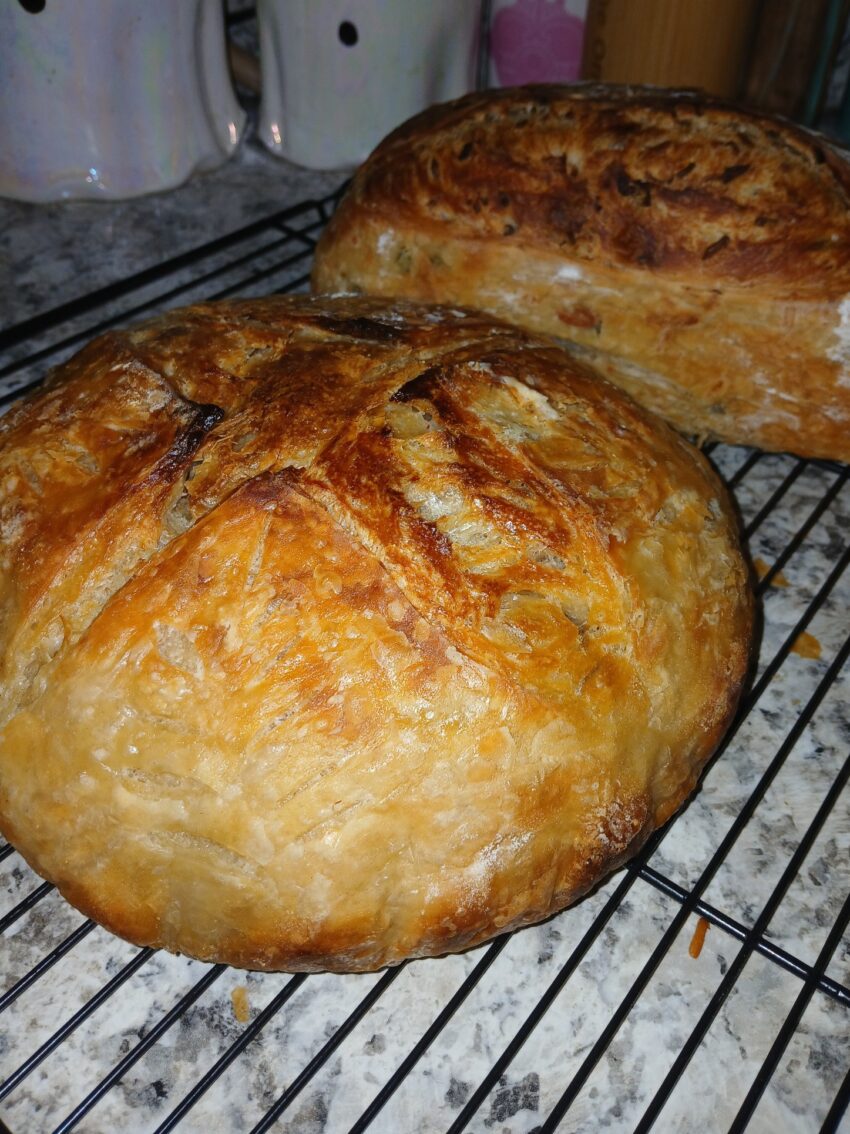
The Ultimate Guide to Homemade Sourdough Croissants
Flaky, Buttery Sourdough Croissants Made from Scratch
Sourdough croissants are the perfect fusion of artisan baking and French pastry. Made with naturally leavened dough instead of commercial yeast, these croissants offer not only the signature flaky texture but also a rich, tangy flavor that can only come from a wild sourdough starter.
While they require time and attention, the result is more than worth it—impossibly light layers of laminated dough that are crisp on the outside, airy on the inside, and full of complex flavor. This recipe will guide you through the process step by step so that even home bakers can master this bakery-style pastry.
Why Make Croissants with Sourdough?
Using sourdough instead of instant yeast slows the fermentation process, resulting in better texture, deeper flavor, and a longer shelf life. Sourdough croissants rise slowly, which allows more time for gluten to develop, moisture to evaporate during baking, and those irresistible buttery layers to take shape.
Sourdough fermentation also makes them slightly more digestible for some people, and it adds a subtle tang that complements the rich, buttery dough.
What Makes a Great Sourdough Croissant?
The key to perfect sourdough croissants is lamination—the process of folding and rolling butter into the dough multiple times to create distinct, flaky layers. You’ll also need patience, a strong sourdough starter, and cold butter.
These croissants require a multi-day approach to allow for fermenting, chilling, folding, shaping, and proofing. Don’t let that intimidate you—the time is mostly passive, and you’ll be rewarded with the best croissants you’ve ever tasted.
Timeline Breakdown (3-Day Method)
Day 1:
- Mix and ferment the sourdough croissant dough.
- Let it rise at room temperature for a few hours.
- Refrigerate overnight.
Day 2:
- Laminate the dough with butter (3 folds).
- Chill between folds.
- Shape the croissants and place them on a tray.
Day 3:
- Final proof (slow rise) at a warm room temperature.
- Bake to golden perfection.
This schedule allows for controlled fermentation and optimal flakiness.
Ingredients Breakdown
Let’s explore what each component brings to this incredible pastry:
- Strong all-purpose or bread flour – Helps form strong gluten to support layers.
- Active sourdough starter – Provides rise and tangy flavor.
- Milk & water – Adds richness and helps hydrate the dough.
- Sugar – Sweetens the dough just enough for that classic pastry flavor.
- Salt – Balances flavor and strengthens gluten.
- Butter (for dough + lamination) – The star of the show, creating airy layers and rich taste.
- Egg (for egg wash) – Helps croissants achieve a glossy, golden finish.
Use high-quality butter—European-style butter with a higher fat content is ideal for perfect lamination.
How to Laminate Croissant Dough
Laminating dough is a skill that becomes easier with practice. Here’s how it works:
- Prepare a butter block: Pound butter into a flat, even rectangle.
- Enclose it in dough: Roll dough around the butter.
- Roll and fold: Roll the dough into a rectangle, fold like a letter (called a “single turn” or “book fold”).
- Repeat: Chill and repeat this process two more times for those signature layers.
Keep everything cold to prevent the butter from melting into the dough.
Tips for Shaping and Proofing
- Cut the dough into long triangles to roll traditional croissant shapes.
- Stretch the triangle gently before rolling it to help form a tight spiral.
- Final proofing should be slow and warm (around 75–80°F)—too hot and butter may melt.
- Look for jiggly, puffy croissants that spring back slowly when gently touched.
How to Know When They’re Done
Croissants are ready when:
- They are deep golden brown.
- The layers have expanded visibly.
- The bottoms are crisp and firm.
- They sound hollow when tapped.
Let them cool at least 20 minutes before biting into one—the steam inside continues cooking them and keeps the interior soft.
Storage & Freezing
Fresh croissants are best the same day, but you can:
- Store in an airtight container at room temperature for 1–2 days.
- Reheat in the oven at 325°F for 5–10 minutes to refresh crispness.
- Freeze unbaked shaped croissants for up to 2 months. Defrost and proof before baking.
Notes & Tricks
- Use cold tools and chill often: Cold helps with butter integrity during lamination.
- Don’t skip resting: It keeps gluten from resisting rolling.
- Use a ruler and pizza cutter: To get even triangle shapes.
- Add fillings like chocolate or almond paste before rolling for variety.
- Let croissants cool fully before storing to prevent sogginess.
Quick Recipe Summary
Sourdough Croissants
Description:
Buttery, flaky sourdough croissants made with naturally leavened dough and real butter. This 3-day recipe creates layers of golden pastry with a subtle tang and crisp, airy texture.
Duration
- Prep Time: 2 hours (spread over 3 days)
- Chill/Proof Time: 24–36 hours total
- Bake Time: 20–25 minutes
- Total Time: 3 days
- Yield: 12 croissants
Ingredients
- 500g all-purpose or bread flour
- 100g active sourdough starter (100% hydration)
- 180g milk
- 80g water
- 60g granulated sugar
- 10g salt
- 40g unsalted butter (for dough)
- 250g unsalted butter (for laminating)
- 1 egg (for egg wash)
Instructions
- Mix dough: Combine flour, starter, milk, water, sugar, salt, and 40g butter. Knead until smooth. Let rise 4–6 hours, then refrigerate overnight.
- Prepare butter block: Shape cold butter into a 6×6 inch square between parchment sheets. Chill.
- Laminate: Roll dough into a rectangle, wrap around butter block. Roll and fold (3 single turns), resting dough 30 minutes in the fridge between each.
- Shape croissants: Roll final dough to 1/4″ thick. Cut into long triangles. Roll from base to tip. Place on lined tray.
- Proof: Let croissants rise at room temperature until puffy and jiggly (4–8 hours).
- Egg wash and bake: Preheat oven to 400°F (200°C). Brush with egg wash and bake for 20–25 minutes until golden brown.