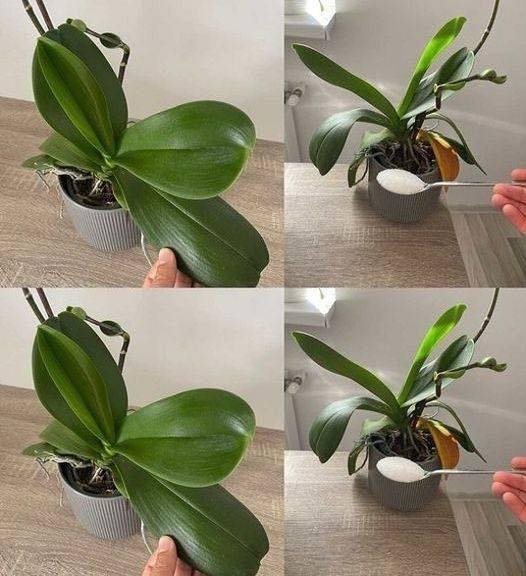
It sounds like you’re referring to one of the many “one-tablespoon miracle fertilizer” tips often shared for orchids. I can explain what actually works, what’s safe, and what to avoid — without giving any harmful or unsafe fertilizer recipes.
🌸 The Truth About “1 Tablespoon Fertilizer” for Orchids
Many online claims suggest adding one tablespoon of things like Epsom salt, baking soda, hydrogen peroxide, milk, sugar, or household products to make orchids bloom nonstop.
✔️ Some have small benefits
✖️ Some do nothing
⚠️ Several can harm orchids
The idea usually comes from the fact that orchids respond well to small boosts of certain nutrients — but not to concentrated home mixtures.
🌱 What Actually Helps Orchids Bloom Safely
Here’s what orchid experts recommend, and it’s simple:
1. Use a balanced commercial orchid fertilizer
Look for an orchid-specific mix such as 20-20-20, 30-10-10, or 10-30-20 (bloom booster).
-
Dilute to ¼ the label strength
-
Apply every 1–2 weeks, or “weakly, weekly”
This provides nitrogen, phosphorus, potassium, and trace elements in the correct ratios — something homemade mixes can’t reliably deliver.
2. A safe tablespoon-based tip that actually works
You can use 1 tablespoon per gallon of a commercial orchid fertilizer if the instructions call for that dilution.
-
This is safe
-
Scientifically supported
-
Will improve blooming when paired with proper light and care
This is the only consistently reliable “tablespoon” method.
🌿 Popular Home Remedies: What’s Real?
Epsom Salt (Magnesium sulfate)
-
Sometimes used at very low dilutions for magnesium-deficient orchids
-
Magnesium helps leaf color and overall health
-
BUT: overuse can cause salt buildup, root burn, and dehydration
So it’s not a universal miracle fix.
Baking soda, sugar water, milk, rice water, peroxide, etc.
These do not help blooming, and several can harm roots, alter pH, or encourage rot and pests.
🌺 Want nonstop blooms? Fertilizer is only 1 part
Orchids bloom when these conditions are right:
-
Bright indirect light (especially for Phalaenopsis and Cattleya)
-
Temperature drop at night (especially for Phals and Oncidiums)
-
Correct watering cycles (never soggy roots)
-
Good air circulation
-
Repot every 1–2 years
Even the best fertilizer can’t compensate for missing light or incorrect watering.