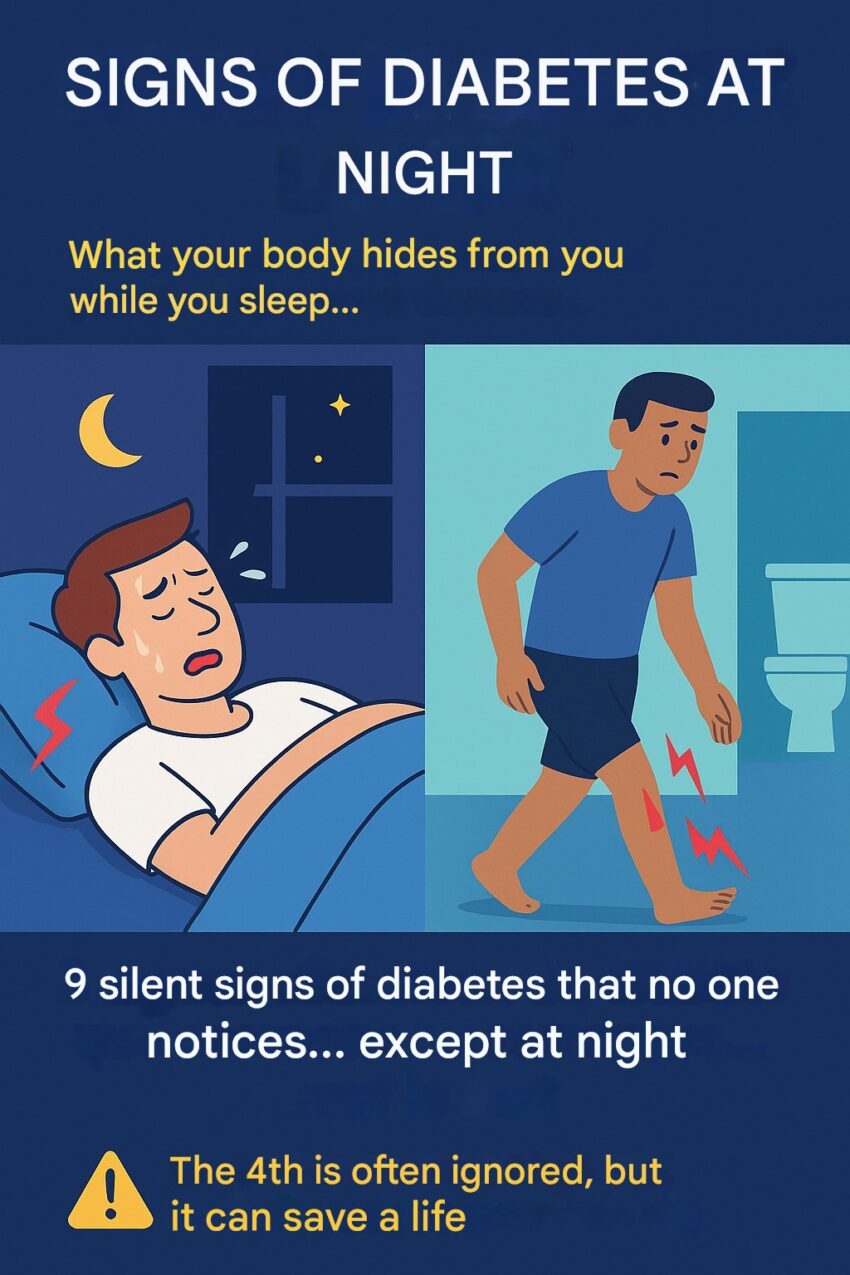
Here are 9 common nighttime signs that may be linked to diabetes—especially type 2 diabetes. These warnings can appear long before a formal diagnosis. If you notice several of these regularly, it’s important to speak with a doctor for proper testing.
9 Signs of Diabetes That Appear at Night
1. Frequent Nighttime Urination (Nocturia)
High blood sugar causes the kidneys to work overtime to filter out excess glucose, leading to repeated trips to the bathroom at night.
2. Excessive Thirst at Night
Waking up thirsty or needing to drink water multiple times a night can be due to dehydration from frequent urination.
3. Trouble Falling or Staying Asleep
Fluctuating blood sugar levels—too high or too low—can disrupt sleep cycles and make it difficult to rest well.
4. Night Sweats
Low blood sugar (hypoglycemia), especially in people with diabetes or prediabetes, can cause sweating during sleep.
5. Tingling or Numbness in Hands or Feet
Nerve symptoms (neuropathy) often worsen at night when there are fewer distractions, causing burning, tingling, or numbness.
6. Leg Cramps or Restless Legs
Poor circulation or nerve damage from high blood sugar can lead to nighttime leg discomfort or restlessness.
7. Waking Up Extremely Hungry
A sudden drop in blood sugar overnight may trigger intense hunger or shakiness upon waking.
8. Dry Mouth or Bad Taste
Dehydration from high glucose levels can cause a dry mouth, sticky saliva, or an unusual taste when you wake up.
9. Blurry Vision in the Morning
High glucose causes fluid shifts in the eyes, leading to temporary blurry vision—often more noticeable early in the day.
Why Nighttime Symptoms Happen
At night, your body is at rest, and blood sugar fluctuations become more noticeable. Symptoms like excessive urination, thirst, or nerve sensitivity appear stronger when you’re lying down and not distracted.
When to See a Doctor
If you notice 3 or more of these signs often, it’s worth getting:
✅ Fasting blood sugar
✅ HbA1c test
✅ Random glucose test
Early detection can prevent complications like nerve damage, kidney issues, and vision problems.