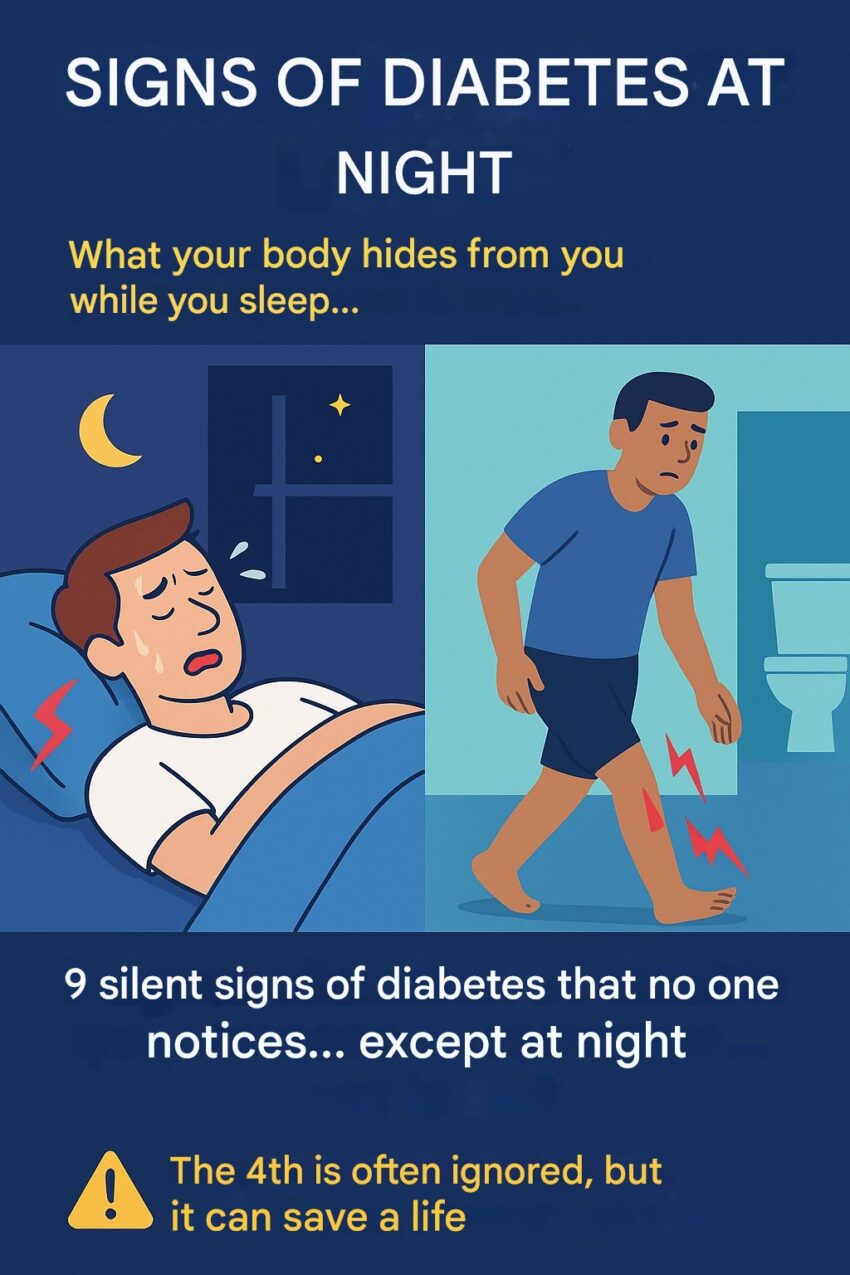
Here’s a detailed overview of 9 signs of diabetes that often show up at night and what they could mean for your health:
1. Frequent Nighttime Urination (Nocturia)
-
What happens: Needing to get up multiple times to urinate during the night.
-
Why: High blood sugar causes your kidneys to work harder to remove excess glucose, leading to increased urine production.
-
Tip: Keep track of how often you wake up; frequent episodes can indicate uncontrolled blood sugar.
2. Excessive Thirst at Night
-
What happens: Feeling very thirsty and needing to drink water multiple times after going to bed.
-
Why: Dehydration from frequent urination triggers intense thirst.
3. Night Sweats
-
What happens: Waking up drenched in sweat even in a cool room.
-
Why: Blood sugar fluctuations, especially hypoglycemia (low blood sugar), can trigger sweating at night.
4. Leg Cramps or Numbness
-
What happens: Painful leg cramps, tingling, or numbness while sleeping.
-
Why: High blood sugar over time can damage nerves (diabetic neuropathy), often noticeable at night.
5. Unexplained Hunger
-
What happens: Waking up hungry in the middle of the night despite eating normally during the day.
-
Why: Blood sugar drops during sleep due to insulin issues, prompting your body to signal hunger.
6. Trouble Sleeping (Insomnia or Restless Sleep)
-
What happens: Difficulty falling or staying asleep.
-
Why: Frequent urination, leg cramps, or fluctuating blood sugar can disrupt your sleep cycles.
7. Nighttime Headaches
-
What happens: Headaches upon waking in the middle of the night or early morning.
-
Why: High blood sugar leads to dehydration or changes in blood vessel dilation, triggering headaches.
8. Unusual Night Sweating During Hypoglycemia
-
What happens: Sweating, shakiness, or feeling anxious in the middle of the night.
-
Why: Low blood sugar from too much insulin or skipping dinner can cause hypoglycemic episodes.
9. Bedwetting or Accidents in Adults
-
What happens: Accidental urination during sleep.
-
Why: High blood sugar increases urine volume and frequency, sometimes leading to nighttime accidents.
What to Do
-
Monitor: Track blood sugar, especially if you notice these symptoms regularly.
-
Consult: See a healthcare professional for blood tests to check for diabetes or prediabetes.
-
Lifestyle: Maintain a balanced diet, stay hydrated, and avoid excessive sugar intake before bed.