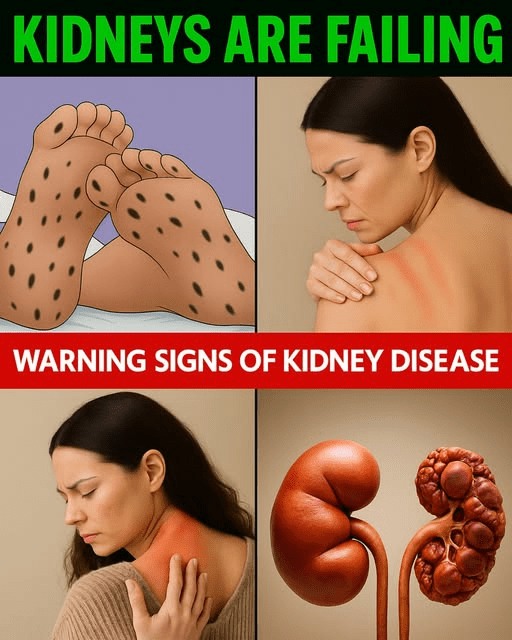
Here’s a detailed breakdown of 7 early signs of kidney disease that you should never ignore:
1. Changes in Urination
-
Frequency: You may urinate more often, especially at night, or much less than usual.
-
Appearance: Urine may appear foamy, bubbly, or darker in color.
-
Urgency: Feeling a sudden urge to urinate or difficulty starting urination.
Tip: Track your urination patterns and report any sudden or persistent changes to your doctor.
2. Swelling (Edema)
-
Kidneys that aren’t filtering properly can cause fluid buildup in the body.
-
Common areas: Feet, ankles, hands, and around the eyes.
Tip: Swelling that doesn’t subside with rest could indicate early kidney problems.
3. Fatigue and Weakness
-
Damaged kidneys fail to remove waste efficiently, leading to a buildup of toxins.
-
This can result in persistent fatigue, weakness, or feeling lightheaded.
Tip: If lifestyle changes don’t improve your energy levels, get kidney function tests.
4. Shortness of Breath
-
Fluid retention can accumulate in the lungs, making it hard to breathe.
-
Anemia from kidney issues can also reduce oxygen delivery, worsening breathlessness.
Tip: Don’t ignore unexplained breathlessness, especially if it comes with swelling or fatigue.
5. Persistent Itching
-
Waste buildup in the bloodstream can cause severe, chronic itching (uremic pruritus).
-
Often worsens at night and doesn’t respond well to topical creams.
Tip: If itching is accompanied by other kidney-related symptoms, consult a healthcare provider.
6. Metallic Taste or Ammonia Breath
-
Kidney dysfunction can cause a metallic taste in the mouth or breath that smells like ammonia.
-
Food may lose its flavor, and some people experience nausea.
Tip: Persistent taste changes or bad breath can signal toxin buildup due to kidney issues.
7. High Blood Pressure
-
Kidneys play a key role in regulating blood pressure.
-
Kidney disease can both cause and worsen high blood pressure.
Tip: Regular monitoring of blood pressure is vital, and sudden spikes should be investigated.
💡 Important: Kidney disease often progresses silently. Early detection through blood and urine tests can prevent severe complications like kidney failure.