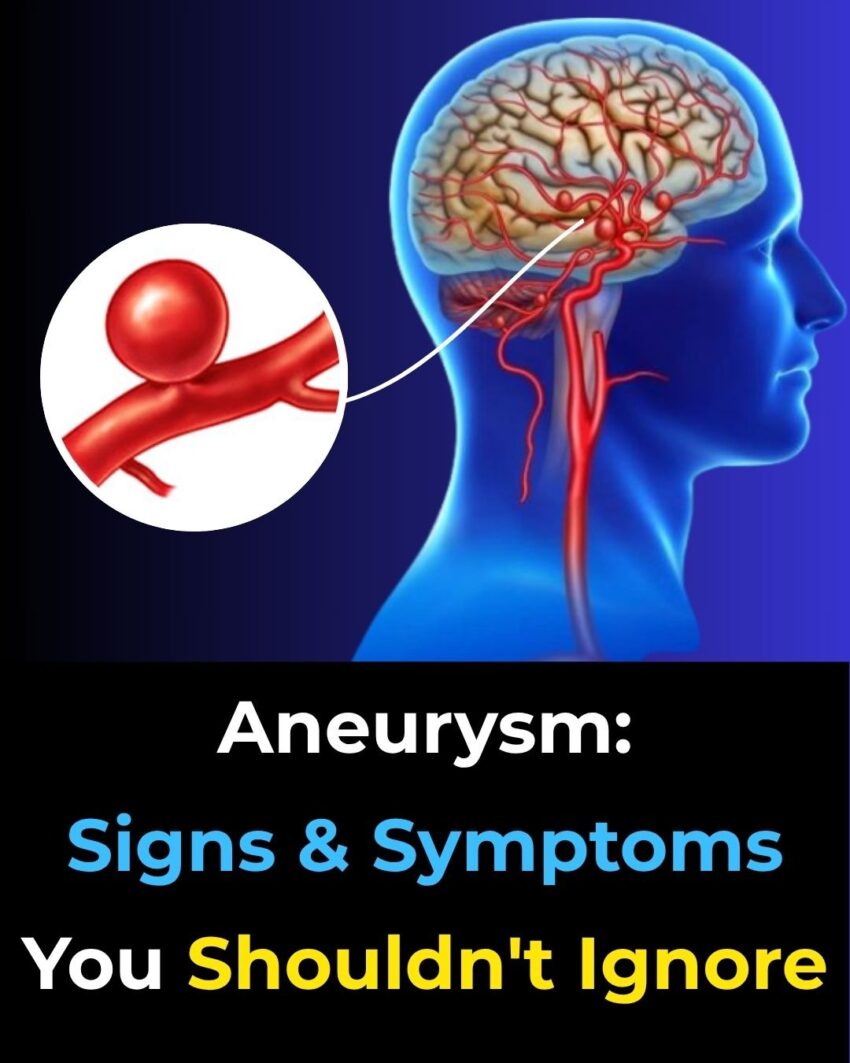
Here’s a detailed list of 12 signs that may signal a brain aneurysm. A brain aneurysm occurs when a weak spot in a blood vessel in the brain bulges and fills with blood. It can rupture, leading to a life-threatening condition called a subarachnoid hemorrhage, so early recognition is crucial.
12 Warning Signs of a Brain Aneurysm
-
Sudden Severe Headache
-
Often described as the “worst headache of your life.”
-
Can appear suddenly and without warning.
-
-
Blurred or Double Vision
-
Vision changes may occur if the aneurysm presses on nerves controlling the eyes.
-
-
Dilated Pupils
-
One pupil larger than the other can be an alarming sign.
-
-
Eye Pain or Pain Above/Behind the Eye
-
Pressure or sharp pain near the eyes or forehead may indicate an aneurysm.
-
-
Facial Numbness or Weakness
-
Numbness or drooping on one side of the face could signal nerve compression.
-
-
Difficulty Speaking or Understanding Speech
-
Slurred speech, confusion, or trouble finding words can appear suddenly.
-
-
Neck Pain or Stiffness
-
Can be a sign of blood irritating the meninges if the aneurysm leaks.
-
-
Nausea and Vomiting
-
Often accompanies a severe headache or sudden neurological symptoms.
-
-
Seizures
-
New-onset seizures without a prior history may be a warning sign.
-
-
Loss of Consciousness or Fainting
-
Can occur suddenly and may indicate a leaking or ruptured aneurysm.
-
-
Sensitivity to Light (Photophobia)
-
Can occur along with headache and nausea.
-
-
Neck or Facial Weakness
-
Drooping eyelid, facial paralysis, or difficulty moving part of the face may occur.
-
⚠️ Important Notes
-
Some aneurysms don’t show any symptoms until they rupture, which is why routine checkups are crucial if you have risk factors (family history, high blood pressure, smoking, or certain genetic conditions).
-
If you experience sudden severe headache, vision changes, or loss of consciousness, call emergency services immediately.