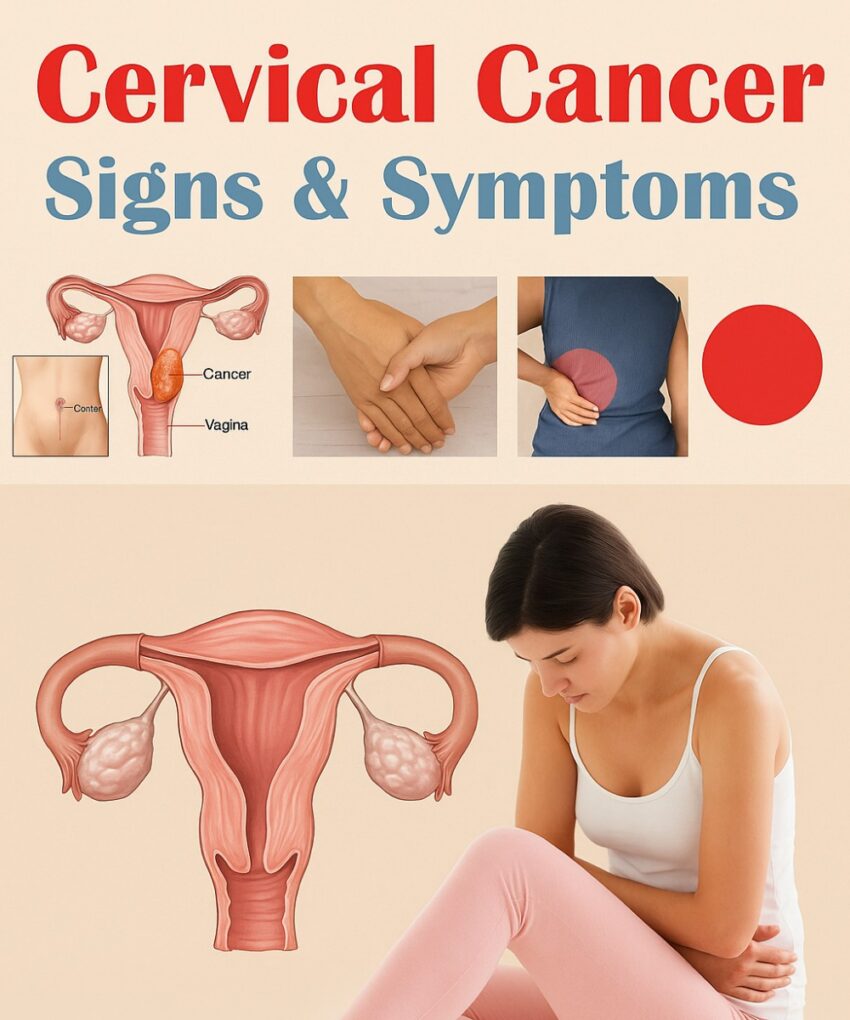
Here are 10 early warning signs of cervical cancer, explained in simple, clear detail — plus why they occur so you can understand what your body is trying to tell you.
(These signs do not always mean cancer but should never be ignored.)
10 Early Warning Signs of Cervical Cancer & Why They Occur
1. Abnormal Vaginal Bleeding
What it looks like:
-
Bleeding between periods
-
Bleeding after sex
-
Bleeding after menopause
Why it occurs:
Cancerous or pre-cancerous cells make the cervix fragile. Small blood vessels can easily break, causing bleeding.
2. Unusual Vaginal Discharge
What it looks like:
-
Watery, pale, brown, or bloody discharge
-
Foul-smelling discharge
Why it occurs:
As abnormal cervical cells grow, they can release fluid or blood, leading to changes in discharge.
3. Pain During Sex (Dyspareunia)
Why it occurs:
Cancer lesions on the cervix or inflammation can make intercourse painful.
It may also occur if the tumor presses deeper into surrounding tissues.
4. Pelvic Pain or Lower Back Pain
What it feels like:
-
Dull ache
-
Sharp pain
-
Persistent discomfort
Why it occurs:
Advanced cervical changes can irritate nerves and tissues in the pelvic region.
5. Pain or Bleeding After a Pelvic Exam
Why it occurs:
A cervix with abnormal cells becomes sensitive, inflamed, or fragile, bleeding easily when touched.
6. Longer or Heavier Periods
Why it occurs:
Cancerous changes disrupt normal cervical and uterine blood flow, leading to heavier menstrual bleeding.
7. Pain or Difficulty Urinating
Why it occurs:
If cancer spreads to nearby tissues, it can press on the bladder or urethra, causing:
-
Burning
-
Difficulty passing urine
-
Increased urge to urinate
(Also caused by infections — but persistent symptoms should be checked.)
8. Leg Swelling (Especially One Leg)
Why it occurs:
Cervical cancer can press on lymph nodes or blood vessels, blocking circulation and leading to swelling.
This is usually a later symptom.
9. Unexplained Weight Loss & Fatigue
Why it occurs:
Cancer cells use the body’s energy, increasing metabolism and causing rapid fatigue and weight loss.
10. Constipation or Bowel Changes
Why it occurs:
A large cervical tumor can press on the rectum, causing:
-
Difficulty passing stool
-
Feeling bloated
-
Abdominal discomfort
Important Note
These symptoms can also be caused by infections, hormonal imbalance, fibroids, or other non-cancerous conditions.
But if symptoms persist more than 2 weeks, it’s important to get checked.
Who Is Most at Risk?
-
HPV infection (main cause of cervical cancer)
-
Smoking
-
Weak immune system
-
Long-term use of birth control pills
-
Not getting regular Pap smears
How to Protect Yourself
-
Regular Pap smears (detect problems early).
-
HPV testing if available.
-
HPV vaccine (recommended even up to age 45 in many cases).
-
Quit smoking.
-
Practice safe sex.